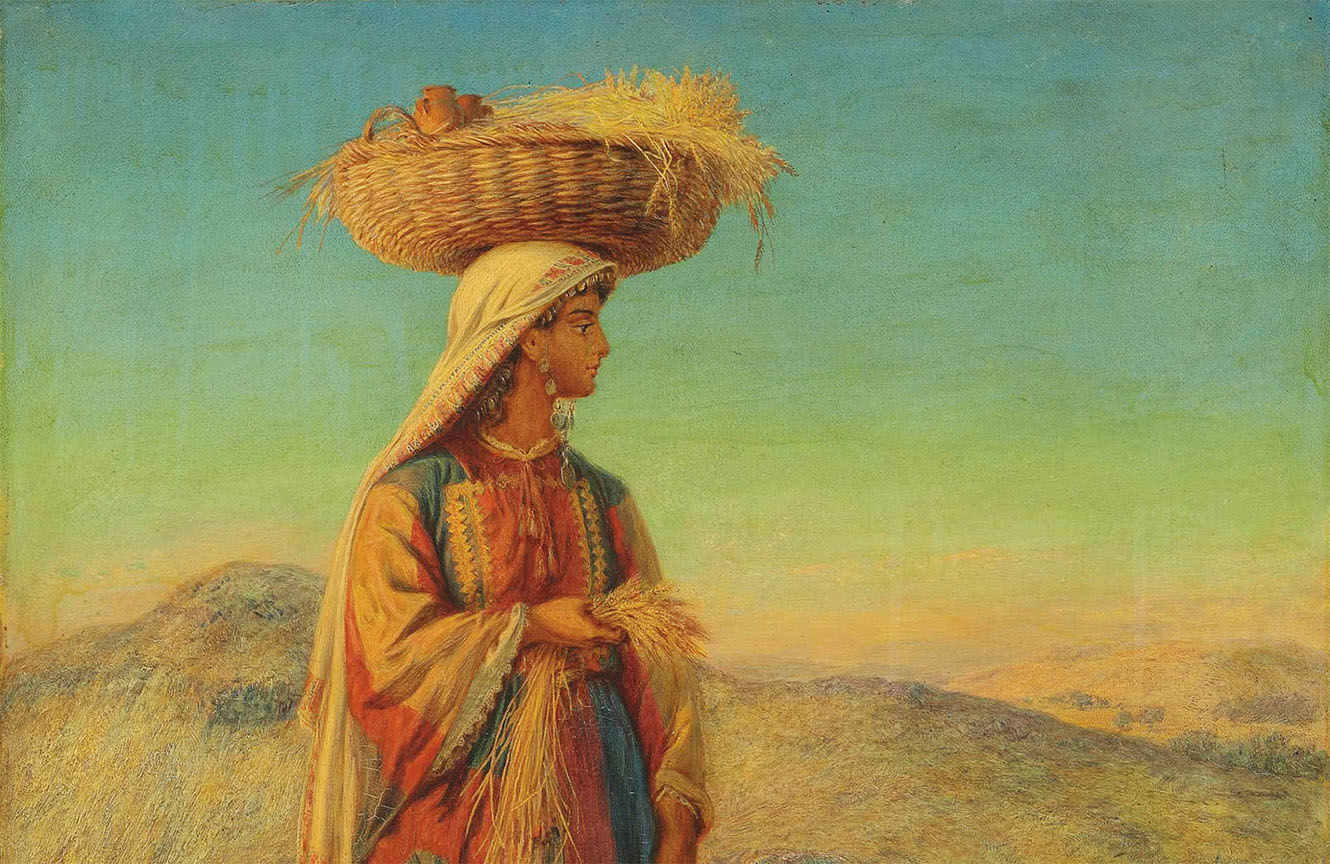
One of my favorite books of the Bible (if I’m allowed to have favorites!) is the book of Ruth. Short but powerful, it tells us so much about God and should encourage an ever-deepening faith in him and his promises.
Do you remember the story? The book begins with Naomi. Through the decision of her husband Elimelech, we are introduced to her and the suffering she undergoes through the death of her husband and two sons (1:1–4). And it is through that hard providence, that Naomi reveals the sinfulness of her heart. She sees her circumstances, not as an opportunity for greater faith in God, but as an opportunity to grow bitter in her outlook on life and cold in her love towards God (1:13).
Though her daughter-in-law Ruth pledges alliance to her and her God (Ruth 1:15–18), Naomi returns to Israel dejected and resentful. When the ladies of her hometown, Bethlehem, gather round her and see the unpleasant change in her heart, they ask, “can this be Naomi?” To this, she responds, “Do not call me Naomi; call me Mara, for the Almighty has dealt very bitterly with me. I went away full, and the Lord has brought me back empty. Why call me Naomi, when the Lord has testified against me and the Almighty has brought calamity upon me?” (1:19–21).
Bitter and empty. As far as Naomi could see, this was the fruit of God’s providence in her life. But by the end of the book, Naomi can see with new eyes. Then she could see through the eyes of faith. It was made clear to her that even in the midst of terrible calamity, God had not forsaken his people. As we get to the end the book, we see that God has proved that his loving-kindness never fails. What we see in Naomi is not a bitter, empty providence, but a God who extends his hand upon his people to reveal a sweet and satisfying providence.
God did this through Ruth and Boaz. Both were individuals who trusted the Lord and lived in light of his gracious salvation. Ruth labored to provide food for Naomi (2:1–3). Boaz was generous beyond the law to provide and protect Ruth, even becoming her kinsmen-redeemer. Imitating the Lord himself, Boaz extended his wings to provide refuge for Ruth and Naomi (2:12; 3:9–13). Ruth and Boaz seem to the be focus. But then come the end of the book:
So Boaz took Ruth, and she became his wife. And he went in to her, and the Lord gave her conception, and she bore a son. Then the women said to Naomi, “Blessed be the Lord, who has not left you this day without a redeemer, and may his name be renowned in Israel! He shall be to you a restorer of life and a nourisher of your old age, for your daughter-in-law who loves you, who is more to you than seven sons, has given birth to him.” Then Naomi took the child and laid him on her lap and became his nurse. And the women of the neighborhood gave him a name, saying, “A son has been born to Naomi” (4:13–17).
Amazingly, Boaz and Ruth fade from the picture and only Naomi and the child are left on stage in this drama! More than anyone else in this story, Naomi is the recipient of God’s gracious blessing. She’s been given new life through the steadfast love of Ruth and the lovingkindness of Boaz who preserves Elimelech’s line (4:14–15). And all know who deserve the glory such a reversal—the Lord himself (4:14)!
When we recall the opening chapters of this book, we clearly see that Naomi did not come back to Israel looking for God. She came back looking for food. While she still held to some degree to right understanding about God—that he was sovereign over all of life, she did not love him—she wasn’t seeking God. In that regard, she was like most of us before coming to Christ. There was no fear of God before our eyes (Rom 3:18).
Yet, God sought after her just as he sought after us! God takes the initiative and begins to call sinners to himself. He sends his Spirit to make the spiritual dead alive so that they may see the work of Christ on their behalf and believe; that they may turn from their sinful rebellion and find their all-satisfying treasure in God himself. What a blessing from God!
But why are we surprised? This was the Lord who showed kindness to Naomi. That is, Yahweh, the God who covenants with his people, Israel. The God who promises to never leave or forsake them (Heb 13:5). It was like God couldn’t get Naomi off his mind! Though bitter and faithless, God worked in the lives of the others to bring her to joyful faith through a redeemer. It’s clear that the Lord is a God who, even in the midst of painful lives, guides us by a sweet and satisfying providence.
And all the more for us today, he continues to do this through our Redeemer, Jesus. By providing for Namoi, God also provide for us—establishing the line that would produce and his greater Son (4:17–22)! So, when we are tempted to endure difficulty, even suffering, in this life, let us never forget the Lord’s kindness and mercy to us. Both in saving us and in sustaining us to the end. Let us take heart and find comfort under his wings of refuge, knowing that, in Christ, there is safety for our soul.
Comments